
Take Action
Sustainability is a collective effort. Explore ways to get involved, build sustainable habits, and make a difference at Loyola.​
Featured Opportunities

Explore All Ways to Take Action
Get Involved
Student Organizations
Connect with fellow Ramblers who are passionate about sustainability! Get involved with student organizations like the Student Environmental Alliance (SEA), Restoration Club, and more to participate in environmental initiatives, volunteer opportunities, and campus events. Explore sustainability-focused student organizations and find your community on .
Volunteer Opportunities
Interested in supporting sustainability through service? Consider one of the many volunteer opportunities below:
Community Service & Action
Â鶹´«Ã½'s Office of Community Service and Action connects students with opportunities to engage with local organizations, support neighborhood initiatives, and address social and environmental challenges. Learn more and serve with CSA!
Think Green and Give
Think Green & Give collects gently used clothing, household items, unopened nonperishable food, and toiletries from students moving out of residence halls at the end of the academic year. Donated items are redistributed to community partners, keeping usable materials out of landfills and giving them a second life.
Interested in volunteering? Check back during spring move-out season for opportunities to sign up for collection and sorting shifts!
Community Opportunities
Make an impact beyond campus by volunteering with local organizations near Â鶹´«Ã½'s campuses! Explore opportunities to support environmental stewardship, community well-being, and neighborhood sustainability. Find ways to get involved through , Handshake, or by connecting directly with local community organizations.
LUREC Work Days
Get outdoors and help restore natural habitats at Â鶹´«Ã½'s Retreat and Ecology Campus (LUREC) in McHenry County! Join the student-led Restoration Club for volunteer workdays held twice a month, where you can take an active role in caring for local ecosystems and supporting habitat restoration efforts.
Learn more about the Restoration Club and sign up for a workday
Internships and Jobs
Gain hands-on experience and make a difference through sustainability-focused internships and student employment opportunities at Loyola. The School of Environmental Sustainability offers opportunities to support campus initiatives, develop professional skills, and explore careers in sustainability.
Explore SES internships and job opportunities or connect with Â鶹´«Ã½'s Career Services for additional career resources.
Interested in bringing sustainability into any career field? Explore to discover how professionals across industries can contribute to climate solutions.
Live Sustainably
Green Dorm Certification
Make your dorm room more sustainable and earn recognition for your efforts! Â鶹´«Ã½'s Green Dorm Certification Program encourages students living on campus to adopt environmentally friendly habits related to waste reduction, energy and water conservation, sustainable purchasing, and more.
Complete the certification checklist to earn Bronze, Silver, or Gold recognition and help your residence hall compete to become one of Â鶹´«Ã½'s greenest!
Compost Bucket Program
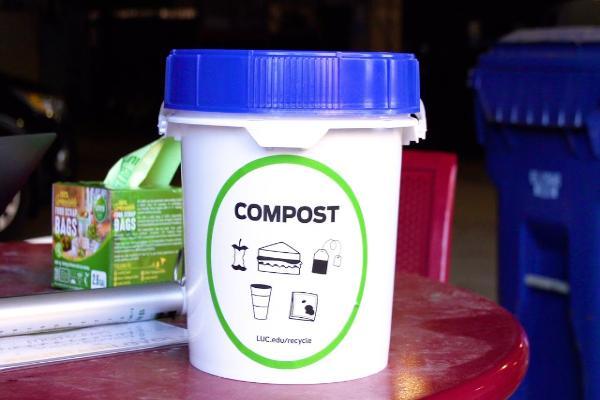
Turn your food scraps into a valuable resource with Â鶹´«Ã½'s Compost Bucket Program! Open to all students, faculty, and staff, the program makes it easy to collect food waste and divert it from landfills. Participants attend a brief training, receive a compost collection bucket, and bring their food scraps to designated campus drop-off locations.
Recycling & Waste Reduction
Living sustainably starts right in your dorm room! From move-in to move-out, small changes in your daily habits can make a big difference in reducing waste on campus. Loyola encourages all students to take an active role in reducing, reusing, and recycling.
Recycle Right
Every Loyola residence hall has designated landfill and recycling bins. Locate your building's trash and recycling room and help keep recyclable materials out of landfills.
- Recycle: Clean, empty paper, cardboard, metal cans, glass bottles and jars, and accepted plastic containers.
- Keep out of recycling: Food scraps, liquids, plastic bags, disposable utensils, and other non-recyclable materials.
- Empty containers and flatten cardboard to prevent contamination and save space.
Not sure where something belongs? Visit Â鶹´«Ã½'s Recycling webpage for guidance.
Reduce Waste Before It Starts
Recycling matters, but reducing and reusing are even better! Build sustainable habits by:
- Carrying a reusable water bottle, coffee mug, and shopping bag.
- Choosing reusable dishes, utensils, and food containers.
- Shopping secondhand and sharing or borrowing items with friends.
- Avoiding unnecessary packaging and single-use products.
- Using digital materials instead of printing whenever possible.
Donate, Don't Dump!
Moving out? Give your unwanted items a second life through Â鶹´«Ã½'s Think Green & Give program, which collects gently used clothing, household items, unopened nonperishable food, and toiletries during spring move-out to support local community partners.
Take It a Step Further!
Join Â鶹´«Ã½'s to explore more sustainable living habits, earn Bronze, Silver, or Gold recognition, and help your residence hall compete to become one of Â鶹´«Ã½'s greenest!
Energy & Water Conservation
Small changes in your daily routine can make a big difference in conserving energy and water at Loyola! From turning off lights to taking shorter showers, students living in residence halls can help reduce resource consumption and support a more sustainable campus.
Save Energy in Your Dorm
Reducing energy use is one of the easiest ways to lower your environmental impact. Try incorporating these habits into your daily routine:
- Turn off lights and electronics when leaving your room.
- Unplug chargers and devices when not in use to avoid unnecessary energy consumption.
- Use natural light whenever possible instead of overhead lighting.
- Be mindful of heating and cooling. Keep windows closed when heating or air conditioning is running, and adjust thermostats responsibly where available.
- Wash clothes in cold water and run full loads of laundry to save energy.
Learn more about Â鶹´«Ã½'s campus-wide conservation efforts on our Energy webpage.
Conserve Water Every Day
Water is a valuable resource, and simple habits can help reduce unnecessary consumption in residence halls.
- Take shorter showers and turn off the water while brushing your teeth.
- Report leaking faucets, running toilets, or other plumbing issues to Residence Life or Facilities.
- Only run full loads of laundry to reduce water and energy use.
- Use a reusable water bottle and refill it at campus water stations instead of purchasing bottled water.
Take It a Step Further!
Put these habits into practice through Â鶹´«Ã½'s ! Complete actions related to energy and water conservation, earn Bronze, Silver, or Gold recognition, and help your residence hall compete to become one of Â鶹´«Ã½'s greenest.
Think Green & Give
Moving out? Don't throw away items that still have life left in them! Â鶹´«Ã½'s annual Think Green & Give program makes it easy for students living in residence halls to donate unwanted items at the end of the academic year. Your donations help reduce move-out waste, keep usable materials out of landfills, and support local community members.
What Can You Donate?
- Gently used, clean clothing and shoes
- Household items, dorm supplies, and small appliances in good condition
- Unopened, nonperishable food
- Unopened toiletries and personal care products
As you prepare to move out, set aside items you no longer need rather than throwing them away. During spring move-out, look for designated Think Green & Give collection locations in your residence hall and follow posted donation guidelines.
Green Your Workplace
Green Office Certification
Help make your workplace more sustainable! Â鶹´«Ã½'s Green Office Program will provide faculty and staff with practical tools to reduce waste, conserve resources, and adopt environmentally friendly office practices. More information on how to participate is coming soon!
Green Lab Certification
Bring sustainability into the lab! Â鶹´«Ã½'s Green Labs Program will help researchers, faculty, and students reduce laboratory waste, conserve energy, and incorporate sustainable practices into research spaces. Stay tuned for more information on how to get involved!
Zero Waste Event Support
Hosting an event on campus? Make sustainability part of your planning! Whether you're organizing a student organization meeting, department gathering, or large campus event, there are simple ways to reduce waste and make your event more environmentally friendly.
Tips for Hosting a Sustainable Event
- Reduce single-use items: Choose reusable plates, cups, utensils, and serving materials whenever possible. Avoid unnecessary decorations, giveaways, and individually packaged items.
- Plan food quantities carefully: Estimate attendance to minimize food waste, and make arrangements to share or donate leftover food when possible.
- Choose sustainable catering options: Work with your caterer to minimize packaging, offer plant-based menu options, and use reusable serviceware.
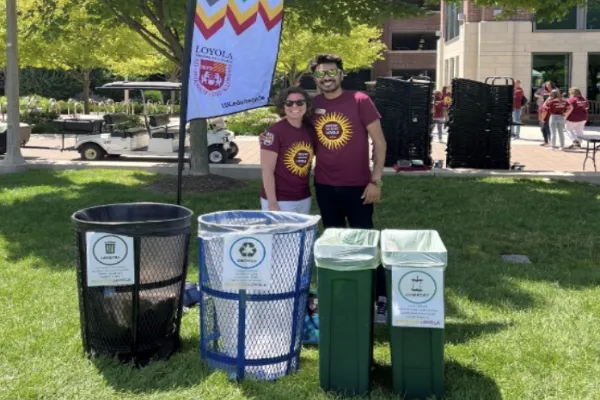
- Make recycling easy: Ensure recycling and landfill bins are clearly labeled and conveniently located throughout your event.
- Communicate with attendees: Encourage guests to bring reusable water bottles, share digital event materials, and properly sort their waste.
Need Additional Support? We're Here to Help!
Â鶹´«Ã½'s Office of Sustainability can help you take your event a step further through personalized waste reduction guidance, event planning consultation, and composting services.
Complete our to tell us about your event, discuss sustainable practices, and request composting resources. We encourage organizers to submit requests early in the planning process so we can best coordinate available support.
Sustainable Purchasing
Every purchasing decision is an opportunity to reduce waste, conserve resources, and support more sustainable practices at Loyola! Whether you're ordering office supplies, purchasing equipment, or planning a departmental event, consider the environmental and social impacts of the products and services you choose.
Make More Sustainable Purchasing Decisions
- Buy only what you need: Check existing supplies, share resources across departments, and avoid unnecessary purchases.
- Choose reusable and durable products: Prioritize items that can be repaired, refilled, or used repeatedly rather than disposable alternatives.
- Look for environmental certifications: When available, choose products with credible certifications such as ENERGY STAR, EPEAT, FSC, or Green Seal.
- Reduce packaging waste: Purchase in bulk when appropriate, select products with minimal or recyclable packaging, and consolidate orders to reduce deliveries.
- Consider recycled content: Choose office paper, notebooks, and other supplies made with post-consumer recycled materials.
- Support responsible vendors: When evaluating purchasing options, consider suppliers' environmental practices, labor standards, and commitments to sustainability.
- Think about the full lifecycle: Consider energy use, maintenance, durability, and disposal costs alongside the initial purchase price.
Start with Your Workplace!
Encourage your department to incorporate sustainable purchasing practices into everyday operations and explore the Green Office Certification Program for additional ways to make your workplace more sustainable.
For all purchases, continue to follow Â鶹´«Ã½'s established purchasing policies and approved procurement procedures.
Employee Â鶹´«Ã½
Loyola offers a variety of employee benefits and resources that support sustainable commuting, personal well-being, and lifelong learning. Faculty and staff are encouraged to explore these opportunities to incorporate sustainability into their daily lives and professional development.
- Pre-Tax Transit Benefits: Reduce the cost of your commute by using pre-tax dollars for eligible public transportation expenses. Explore Â鶹´«Ã½'s employee commuter benefits to make sustainable transportation more affordable.
- Employee Wellness Programs: Take advantage of Â鶹´«Ã½'s wellness resources and programs that support physical, mental, and emotional well-being, encouraging a healthier and more balanced lifestyle.
- Tuition Benefits: Interested in expanding your sustainability knowledge? Eligible employees can use Â鶹´«Ã½'s tuition benefits to enroll in sustainability-related courses and explore topics such as environmental science, climate change, and sustainability management.
Visit Â鶹´«Ã½'s Human Â鶹´«Ã½ website to learn more about available benefits, eligibility requirements, and how to participate.
Serve on a Sustainability Committee
Faculty and staff can contribute to sustainability efforts at Loyola by getting involved in the following committees:
Sustainability Committee
Â鶹´«Ã½'s Sustainability Committee has historically brought together members of the university community to coordinate sustainability initiatives, review proposed projects, and track progress toward institutional sustainability goals. The committee has helped foster collaboration across departments and advance a shared vision for a more sustainable Loyola.
The Sustainability Committee is currently on pause as Loyola evaluates opportunities for future engagement and collaboration around campus sustainability priorities.
Transportation Committee
Co-chairs: Gretchen Carey, Aaron Durnbaugh
This committee meets monthly to discuss transportation, biking, public transit, parking, shuttles, and pedestrian issues. Members include representatives from the Office of Sustainability, Campus Safety, Campus Transportation, Biodiesel Lab, and Student Government of Loyola Chicago.
Please note: All committee meetings are open to attendance. All committees are voluntary and have limited authority but are opportunities to share ideas and concerns with the Loyola Administration. If you are interested in officially joining a committee, please email sustainability@luc.edu with questions.
Learn & Collaborate
Sustainability Courses & Programs
Explore sustainability in the classroom and discover how your education can help address today's environmental and social challenges! Loyola offers a variety of sustainability-focused courses and academic programs that connect environmental science, climate action, social justice, business, public policy, and more.
Find Your Path in Sustainability
- Explore sustainability-focused degrees and minors: Â鶹´«Ã½'s School of Environmental Sustainability offers interdisciplinary academic programs that prepare students to address complex environmental challenges through science, policy, and practice.
- Take sustainability-related courses: Whether you're majoring in environmental science or studying another discipline, explore courses that connect sustainability with your academic interests and career goals.
- Bring sustainability into your field: Discover how environmental responsibility and social justice intersect with business, healthcare, education, the humanities, and other disciplines.
Sustainability isn't limited to one major or career path! Explore opportunities to incorporate sustainability into your studies and develop the knowledge and skills to make a positive impact.
Learn More About Sustainability in Teaching & Research at Loyola
Campus as a Living Lab
Turn Â鶹´«Ã½'s campuses into your classroom, research site, or testing ground for sustainability solutions! Through the Campus as a Living Lab approach, students and faculty can connect academic learning and research with real-world sustainability challenges, using campus operations, facilities, and programs as opportunities for hands-on exploration and innovation.
Opportunities for Students
- Explore campus sustainability challenges: Incorporate topics such as waste reduction, energy conservation, sustainable transportation, biodiversity, and food systems into class projects or independent research.
- Gain hands-on experience: Apply classroom knowledge to real-world challenges by collecting data, evaluating campus practices, or developing recommendations for improvement.
- Collaborate across disciplines: Work with faculty, campus departments, and fellow students to explore sustainability solutions.
Opportunities for Faculty
- Integrate campus sustainability into coursework: Use Â鶹´«Ã½'s buildings, landscapes, operations, and sustainability initiatives as case studies or experiential learning opportunities.
- Develop applied research projects: Explore opportunities to collaborate with the Office of Sustainability and campus partners on research that supports institutional sustainability goals.
- Connect students with real-world challenges: Design assignments and projects that allow students to investigate campus sustainability practices and propose meaningful improvements.
Have an Idea? Let's Collaborate!
Whether you're a student looking for a research topic or a faculty member developing a course project, the Office of Sustainability welcomes opportunities to connect teaching and research with campus sustainability initiatives. Reach out to sustainability@luc.edu to discuss potential projects, available resources, and opportunities for collaboration.
Learn More About Sustainability in Teaching & Research at Loyola
Faculty Research & Teaching
Bring sustainability into your teaching and research! Loyola encourages faculty across all disciplines to explore connections between their fields, environmental sustainability, and social justice. Whether you're developing course content, pursuing interdisciplinary research, or seeking opportunities for collaboration, there are many ways to engage with sustainability in your academic work.
Integrate Sustainability into Teaching
- Incorporate sustainability into your courses: Explore connections between environmental challenges and topics such as business, healthcare, ethics, public policy, and the humanities.
- Encourage interdisciplinary learning: Help students understand sustainability through multiple perspectives and connect classroom concepts to real-world challenges.
- Create experiential learning opportunities: Incorporate community-based projects, environmental research, and hands-on learning into coursework.
Advance Sustainability Research
- Explore interdisciplinary partnerships: Connect with faculty and researchers across departments to address complex environmental and social challenges.
- Engage with community partners: Explore opportunities for research that supports local environmental priorities, community resilience, and environmental justice.
- Collaborate with the Office of Sustainability: Identify opportunities to connect academic research with campus initiatives, sustainability data, and institutional goals.
Explore Â鶹´«Ã½ & Opportunities
The Office of Sustainability welcomes collaboration with faculty interested in incorporating sustainability into their teaching or research. Reach out to sustainabiltiy@luc.edu to discuss potential partnerships, campus resources, and opportunities to connect with ongoing initiatives.
Learn More About Sustainability in Teaching & Research at Loyola
Research Partnerships
Take your research beyond the classroom and collaborate on solutions to real-world sustainability challenges! Whether you're a student developing a research project, a faculty member seeking collaborators, or a community organization with an environmental challenge, research partnerships can connect academic expertise with community knowledge to drive meaningful change.
Turn Your Ideas into Action
- Connect with community partners: Work with local organizations, nonprofits, or government agencies to address environmental challenges and community priorities.
- Collaborate across disciplines: Bring together researchers and students from different fields to explore complex sustainability issues.
- Pursue research opportunities: Seek out collaborative projects, funding opportunities, and partnerships that connect academic research with practical solutions.
- Share your findings: Translate research into recommendations, educational resources, or strategies that benefit communities and inform decision-making.
Have a Research Idea? Let's Collaborate!
You don't need an established partnership to get started. Identify a sustainability challenge you're passionate about, connect with potential collaborators, and explore how your academic interests can contribute to meaningful solutions.
Visit the School of Environmental Sustainability's Research webpage to discover research areas and faculty expertise, or contact the Office of Sustainability at sustainability@luc.edu to discuss opportunities for collaboration.
Get Inspired by Research at Loyola
Loyola researchers are already putting collaboration into action. Expand the examples below to see how partnerships are advancing sustainability and consider how your own research could make a difference.
Climate Change & Global Policy
What makes climate policy effective? Loyola researchers have partnered with American University on research examining climate policies across more than 80 countries, helping identify approaches that can drive meaningful climate action.
Environmental Health & Mosquito Control
How can environmental research protect public health? Loyola researcher Justin Harbison has collaborated with local mosquito control agencies to study mosquito management and reduce the risks of mosquito-borne diseases.
Global Water Security
How can research help communities respond to water insecurity? Loyola researchers have worked with the Fe y Alegría rural school network in Peru to investigate water access challenges and explore solutions informed by local needs.
Renewable Energy & Community Engagement
How can communities help shape a more equitable clean energy transition? Loyola researcher Gilbert Michaud has collaborated with researchers at the University of Pennsylvania and Indiana University on a U.S. Department of Energy-funded project exploring community acceptance of large-scale solar developments.